Looting pit or bomb crater? Reading ground disturbance in VHR imagery
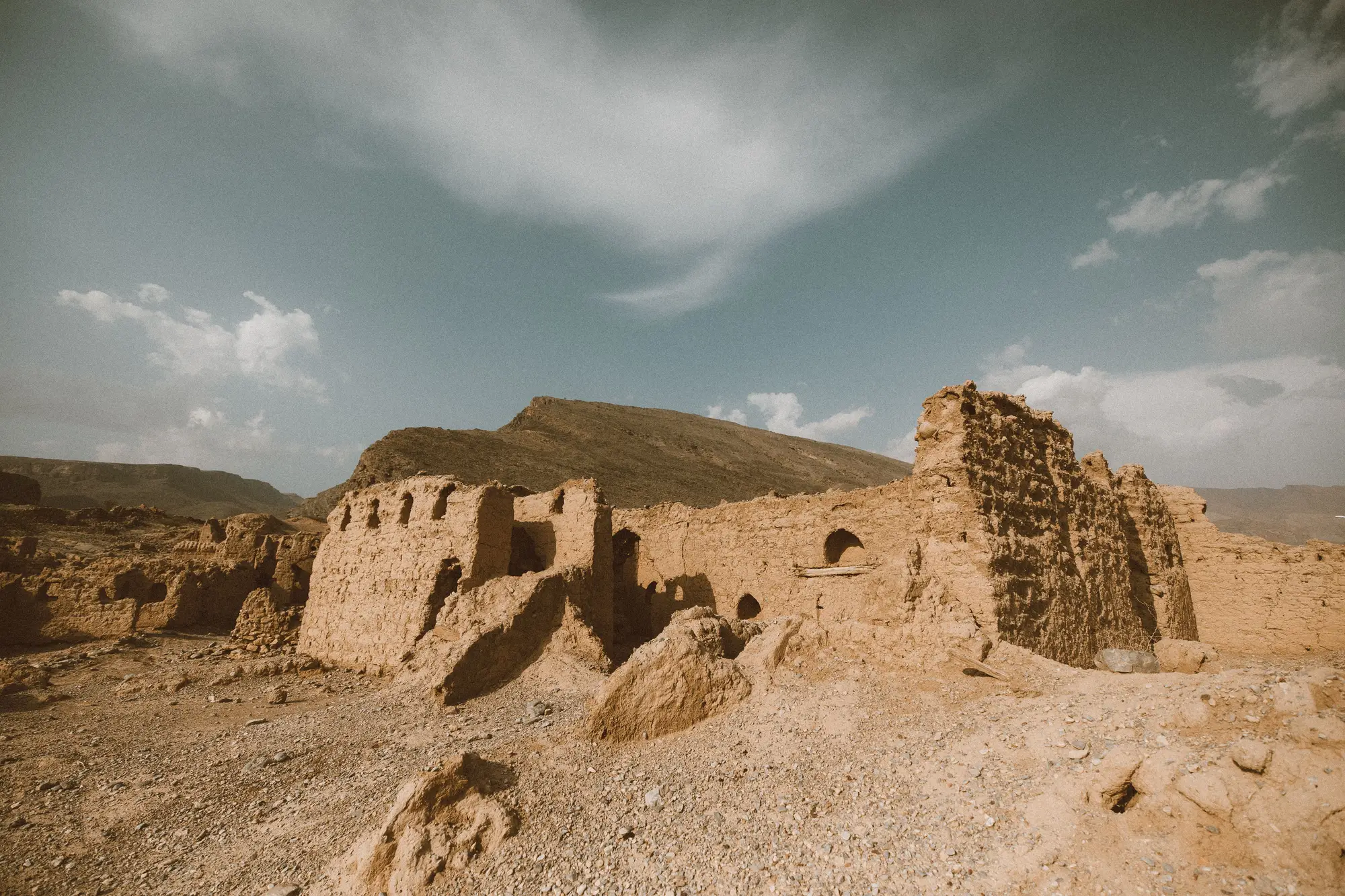
A tell covered in pockmarks after a conflict year doesn't tell you on its own what made the holes. Some of that disturbance is illicit digging, some is ordnance, and at 0.3-0.5 m GSD the two can look alarmingly alike on a first pass. Getting the call wrong in a condition report matters: one feeds an INTERPOL or UNESCO looting alert, the other belongs in a different damage assessment entirely with different authorities attached.
There's no single diagnostic that settles it every time. But a few features, read together, separate the two most of the time.
Shape and edge geometry
Looters' pits tend toward regular geometry because someone dug them with intent, usually a spade or a small mechanical digger, to reach a specific depth or follow a wall line. Expect roughly circular or rectangular outlines, straight-ish edges, and a fairly consistent diameter across a cluster, often 1-3 m. Pits frequently appear in rows or grids across a mound, following stratigraphy rather than blast physics.
Bomb and shell craters are built by an explosion working outward from a point, so they read differently. Look for true radial symmetry, a raised lip or rim running continuously around the circumference, and in fresher craters a scorch halo or ejecta scatter extending beyond the rim itself. Artillery craters from repeated shelling cluster too, but irregularly, following a firing pattern or trench line rather than the shape of a buried structure.
Edge sharpness is a tell. A looting pit's spoil sits in a heap beside the hole, pushed there by hand or bucket. A crater's material is thrown outward and down, so you'll often see debris scattered in a rough fan rather than piled in one spot.
Spoil, backdirt and surrounding disturbance
This is usually the clearer signal of the two. Looted pits come with backdirt: a mound of excavated soil dumped at the pit edge, often slightly darker or lighter than the undisturbed ground depending on subsoil color, and it stays there because nobody's trucking it off a remote site. In a VHR frame that backdirt shows as a bright or dark crescent hugging one side of the hole.
Munitions damage throws material further and more evenly, and a lot of it settles back into the crater itself or disperses across vegetation nearby rather than forming a discrete mound. Fresh craters also show thermal or vegetation scarring in the surrounding few meters, which a looting pit won't produce unless the site was also burned.
Vehicle tracks matter here too. Looting operations, especially organized ones, leave access tracks leading to and from a dig, sometimes with a vehicle parked at the pit edge in the capture. Shelling doesn't need a vehicle to arrive on-site, so isolated craters with no approach track and no spoil mound lean toward munitions by default.
Site context and dating
Context does a lot of the disambiguation that shape alone can't. A pit appearing inside a known tell, mound cemetery, or scheduled excavation area is more likely looting, simply because that's where buried material worth digging for actually is. A hole appearing along a frontline, near a destroyed building, or in a line consistent with a known engagement is more likely munitions.
Dating helps too. Looting activity tends to appear gradually between archive frames, sometimes a handful of new pits per quarter as a network works a site over time. Shelling damage usually shows up all at once between two captures that bracket a known period of fighting, with many craters appearing in the same revisit rather than a slow trickle.
None of this replaces a frame-by-frame comparison against the last confirmed-clean baseline. If a monitoring officer is doing that by eye across a dozen sites every quarter, the pits and the craters both start blurring together after the tenth frame. Looting Monitoring runs that comparison for you and returns a dated count of new pits and tracks as a before/after pair, so the disturbance you're reading is already flagged before you open the imagery.
Send us a site boundary and a quarter to check against, and we'll show you what changed.