Field notes: the mission that never got its ground visit
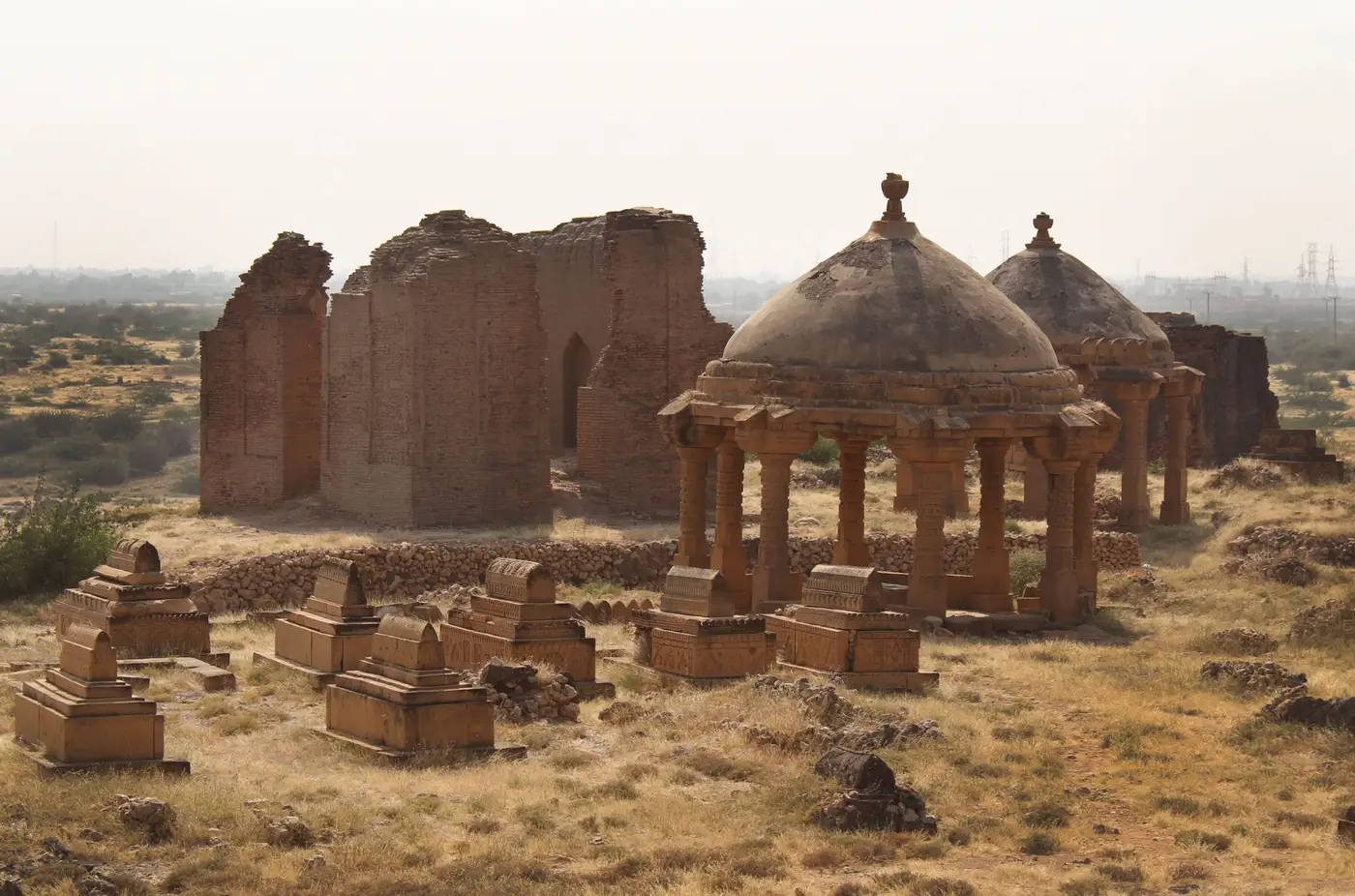
There's a line item on every monitoring plan that quietly moves from "Q2" to "Q3" to "pending security review" until someone stops bothering to update it. Every heritage monitoring officer has one of these sites on their list. Mine, for a stretch of two years, was a necropolis on a stretch of steppe that a shifting front line kept putting on the wrong side of a checkpoint.
The file on it was good, once. Condition survey from before things got bad, a set of reference photographs, GPS points for the tomb clusters, a note about a looted shaft tomb from a decade earlier that had since been backfilled and fenced. All of it assumed someone would walk the ground again within a year or two and update the record. Nobody did. Access went from "difficult" to "not advisable" to simply off the table, and the file sat.
What you do with a site like that is the part nobody trains you for. The reporting template still wants a line. The donor still wants to know the site is being tracked, because tracked is different from abandoned, and the difference matters for what happens if looting is ever documented and someone has to argue for intervention. So you keep the line, and you fill it with whatever you can get your hands on: a secondhand account from a colleague who heard something from someone who crossed the area, a rumor of vehicle tracks near the north cluster that never gets corroborated, a gap in the record that you annotate as a gap rather than pretend is a clean bill of health.
The honest version of that file is mostly caveats. "No visit since [date]." "Condition unknown." "Last confirmed disturbance: [date], unverified since." It reads badly next to the sites where someone still gets out there twice a year, but it's the more truthful document. A clean-looking report on a site nobody has seen in eighteen months is the more dangerous kind of paperwork, because it lets everyone downstream assume a certainty that nobody upstream has.
What changed the shape of that particular file, eventually, wasn't a convoy getting through. It was realizing the ground visit had been doing two jobs that didn't need the same tool. One job was condition assessment in the broad sense, soil stability, structural risk, the kind of judgment that genuinely needs a person physically present at the tomb cluster, reading the soil and the stone. The other job was narrower: has anything been dug here since the last time anyone looked. That second question doesn't need boots on a checkpoint-crossed road. It needs two images of the same ground, taken a few months apart, looked at side by side without having to remember what the terrain looked like last time from a photo buried three folders deep.
That's the gap a quarterly image comparison was built to close. Not the whole file, just the part of it that was sitting empty because a person couldn't get there. It won't tell you whether the backfilled shaft tomb is at risk of collapse, and it won't replace the judgment of someone who has walked a necropolis and knows what a natural slump looks like versus a dig. But it will tell you, on a date you can write down, whether new pits or fresh vehicle tracks have shown up on ground nobody has physically reached since the file went quiet. For a site that's otherwise a blank line with a caveat attached, that's not nothing. It's the difference between "condition unknown" and "no new disturbance detected as of this date," which is a sentence a report can actually stand behind.
The site on my list eventually got a ground visit, two and a half years after the last one, and the survey team found the fencing around the shaft tomb cluster still standing and nothing freshly disturbed. We'd have liked to know that sooner. If you've got a similar line sitting on your own monitoring plan, it's worth looking at what Looting Monitoring can tell you about that ground before the next trip is even scheduled.
Keep the file honest in the meantime.